Nanda - Nursing Care Plan

Showing posts with label Hyperthermia. Show all posts

Hyperthermia related to Urinary Tract Infections


Nursing Care Plan for Urinary Tract Infections
Hyperthermia related to Urinary Tract Infections
A urinary tract infection (UTI) is an infection that affects part of the urinary tract. A urinary tract infection (UTI) (also known as acute cystitis or bladder infection). Urinary tract infections (UTIs) are very common – particularly in women, babies and the elderly. Around one in two women and one in 20 men will get a UTI in their lifetime.

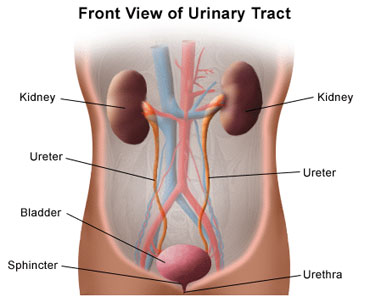
The infection can occur at different points in the urinary tract, including:
  • Urethra. An infection of the tube that empties urine from the bladder to the outside is called urethritis.
  • Kidneys. An infection of one or both kidneys is called pyelonephritis or a kidney infection.
  • Ureters. The tubes that take urine from each kidney to the bladder are rarely the only site of infection.
  • Bladder. An infection in the bladder is also called cystitis or a bladder infection.
Some of the symptoms include:
  • Burning pain or a ‘scalding’ sensation when urinating
  • Pain above the pubic bone
  • Wanting to urinate more often and urgently, if only a few drops
  • A feeling that the bladder is still full after urinating
  • Blood in the urine.

Most urinary tract infections are caused by bacteria that live in the digestive system. Bacteria that enter the urethra and then the bladder. Women tend to get them more often because their urethra is shorter and closer to the anus than in men.
The most common culprit is a bacterium common to the digestive tract called Escherichia coli (E. coli).
Other micro-organisms, such as mycoplasma and chlamydia, can cause urethritis in both men and women.


Nursing Care Plan for Urinary Tract Infections

Hyperthermia related to infection.
Goal: the patient's body temperature to normal.

Expected outcomes:
  • The patient's body temperature is normal.
  • Acral feel warm.
  • Patients calm / relaxed.

Interventions and Rationale :

Independent

1. Assess increase in body temperature through laboratory tests.
R /: To determine the factors causing an increase in body temperature and to establish further therapy program.

2. Perform a cold or warm compresses on the body.
R /: Warm compresses can enhance vasodilation of blood vessels while cold compress increase vasoconstriction of blood vessels.

Collaboration

3. Implement treatment programs: Management of antipyretics as indicated.
R /: Antipyretics reduce fever.

Observation

4. Monitoring of vital signs.
R /: To know the state of the patient.

5. Monitor fluid intake and output.
R /: Intake and output were less able to stimulate the growth of bacteria in the urinary vesica.

Hyperthermia related to Dengue Hemorrhagic Fever (DHF)

Dengue Hemorrhagic Fever (DHF) - Hyperthermia Care Plan

NCP DHF - Nursing Diagnosis Interventions : Hyperthermia

Hyperthermia is elevated body temperature due to failed thermoregulation that occurs when a body produces or absorbs more heat than it dissipates. Extreme temperature elevation then becomes a medical emergency requiring immediate treatment to prevent disability or death.

Dengue hemorrhagic fever is a severe, potentially deadly infection spread by certain species of mosquitoes (Aedes aegypti).

Early symptoms of dengue hemorrhagic fever are similar to those of dengue fever, but after several days the patient becomes irritable, restless, and sweaty. These symptoms are followed by a shock -like state.

Bleeding may appear as tiny spots of blood on the skin (petechiae) and larger patches of blood under the skin (ecchymoses). Minor injuries may cause bleeding.

Shock may cause death. If the patient survives, recovery begins after a one-day crisis period.

Early symptoms include: Decreased appetite, Fever, Headache, Joint aches, Malaise, Muscle aches, Vomiting.

Acute phase symptoms include:
  • Restlessness followed by: Ecchymosis, Generalized rash, Petechiae, Worsening of earlier symptoms
  • Shock-like state : Cold, clammy extremities, Sweatiness (diaphoretic)


Nursing Diagnosis and Interventions for Dengue Hemorrhagic Fever (DHF) :

Hyperthermia related to the dengue virus infection.

Goal: Hyperthermia can be resolved

Expected outcomes: body temperature returned to normal

Intervention

1) Observation vital signs, especially temperature.

2) Give cold compress (water) on the forehead and armpits.

3) Change clothes that have been soaked with sweat.

4) Encourage the family to put on clothing that can absorb sweat like cotton.

5) Encourage your family to drink lots of approximately 1500 to 2000 cc per day.

6) collaboration with doctors in Therapy, febrifuge.